
Every large weight-loss result now comes with a second number attached. A patient who loses 30 kilograms after gastric bypass, or 20 on tirzepatide, has not lost 30 or 20 kilograms of fat. Part of the loss is lean tissue: muscle, organ mass, water and the other components that a body-composition scan counts as “not fat”. How large that part is, whether it matters, and what can be done about it are now some of the most argued questions in obesity medicine.
The arguments are easier to follow once the numbers are laid side by side. Both treatments have been studied with dual-energy x-ray absorptiometry (DXA), the same low-dose scan used to measure bone density, and both turn out to remove lean mass in roughly the same proportions.
What the scans measure
DXA separates the body into three compartments: fat mass, bone mineral and lean soft tissue. “Lean mass” in these studies is therefore broader than muscle; it includes skeletal muscle, but also organs, connective tissue and body water. Some papers report fat-free mass (lean mass plus bone), others appendicular lean mass in the arms and legs as a closer proxy for skeletal muscle. That distinction matters when comparing studies, and it is one reason the percentages below vary.
After bariatric surgery
The most complete picture of surgical patients comes from a 2022 meta-analysis in Obesity Reviews that pooled 59 studies measuring body composition before and after surgery. One year after the operation, patients had lost more than 8 kg of fat-free mass and lean body mass, which represented 21% and 22% of their total weight loss. The pooled lean body mass loss at 12 months was 8.13 kg.
The timing is the striking part. About 55% of the 12-month lean mass loss happened in the first three months after surgery, when food intake is at its lowest and weight is falling fastest. After that the decline slows considerably.
A 2026 cohort of 179 gastric bypass patients in the Journal of Clinical Medicine puts individual variation on top of that average. The median share of weight lost as fat-free mass was 26.4% at six months and 28.7% at twelve. Using a threshold of 30% to define excessive loss, 27% of patients exceeded it at six months and 31% at twelve. Most of the loss, a mean of 6.4 kg, occurred in the first six months, and fat-free mass at six months was the only independent predictor of where a patient ended up at twelve. Age, sex and starting BMI were not.
On semaglutide and tirzepatide
The drug trials report remarkably similar fractions. In STEP 1, the trial that led to semaglutide 2.4 mg being approved for weight management, 140 participants had DXA scans. After 68 weeks, body weight in the semaglutide group was 15.0% lower, total fat mass 19.3% lower, visceral fat 27.4% lower and total lean body mass 9.7% lower. Lean tissue accounted for roughly two-fifths of the weight lost, and yet the proportion of lean mass relative to remaining body weight rose by 3.0 percentage points, because fat fell faster.
Tirzepatide’s SURMOUNT-1 DXA substudy, covering 160 of the trial’s 2,539 participants, reported a 21.3% fall in body weight, a 33.9% fall in fat mass and a 10.9% fall in lean mass over 72 weeks. That works out to 74% of the weight lost as fat and 26% as lean mass. The placebo group, which lost far less weight through lifestyle measures alone, lost it in almost exactly the same proportions: 75% fat and 25% lean.
The real-world SEMALEAN study followed 106 patients with a mean BMI of 46.3 kg/m² for a year on semaglutide. Fat mass fell 18.9% by month 12; lean mass fell by about 3.0 kg by month seven and then stabilised. Handgrip strength improved by 4.5 kg at 12 months, and the share of patients meeting criteria for sarcopenic obesity fell from 49% to 33%.
The comparison in one table
| Study | Treatment | Follow-up | Lean share of weight lost |
|---|---|---|---|
| Nuijten 2022 meta-analysis (59 studies) | Bariatric surgery | 12 months | About 22% (lean body mass) |
| Perez-Romero 2026 cohort (179 patients) | Gastric bypass | 12 months | Median 28.7% (fat-free mass) |
| STEP 1 DXA substudy (140 patients) | Semaglutide 2.4 mg | 68 weeks | Roughly 40% |
| SURMOUNT-1 DXA substudy (160 patients) | Tirzepatide | 72 weeks | 26% (same as placebo) |
A 2025 review in Current Opinion in Clinical Nutrition and Metabolic Care summarises the wider literature in similar terms: fat-free mass typically makes up 20–30% of diet-induced weight loss and roughly 20–40% of weight lost on GLP-1 receptor agonists, with most studies above 25%. Surgery behaves much like the drugs.
Mass is not the same as strength
The finding that complicates the alarm is that strength usually holds up better than mass. A 2023 meta-analysis in Obesity Surgery of ten studies and 301 patients found that bariatric surgery reduced lean mass by 7.4 kg and fat mass by 22.3 kg, but the change in absolute handgrip strength, minus 0.46 kg, was not statistically significant. Relative to body weight, strength improved.
That pattern underpins a 2024 JAMA Viewpoint by Conte, Hall and Klein, which argued that lean mass losses of 25–39% of total weight lost on GLP-1–based drugs need context. People with obesity carry muscle sized for the load they move every day; when the load falls, some loss of that muscle is an expected adaptation, not necessarily a harm. The authors also pointed out that weight loss tends to improve muscle quality, with less fat stored inside and between muscle fibres and better insulin sensitivity, and that low muscle mass caused by illness carries a different prognosis from muscle lost during intentional weight loss.
None of this means lean mass is irrelevant. Older patients, those who start with low muscle mass and those who lose weight very quickly have less reserve to spare, and the 2026 gastric bypass data show that a substantial minority lose well over a quarter of their weight as fat-free mass.

What exercise can recover
Exercise is the obvious countermeasure, and the evidence is more modest than the advice. A 2021 meta-analysis in Obesity Reviews found that structured exercise after bariatric surgery added about 1.8 kg of extra weight loss and 2.1 kg of extra fat loss across 14 and 9 studies respectively. Its effect on lean body mass across 11 studies, plus 0.7 kg, was not statistically significant; the authors estimated that exercise in the first post-operative year prevents about 1 kg of lean mass loss on average, against roughly 10 kg lost after gastric bypass over the same period. Exercise did have a significant protective effect on bone mineral density.
The practical reading is that resistance training and adequate protein improve strength, function and bone, and slow lean mass loss at the margin, but they do not cancel it.
Reading a body-composition report
Patients increasingly see these numbers on their own reports, from a hospital DXA scan, a sports clinic or a bioelectrical impedance scale. A few points help when reading them:
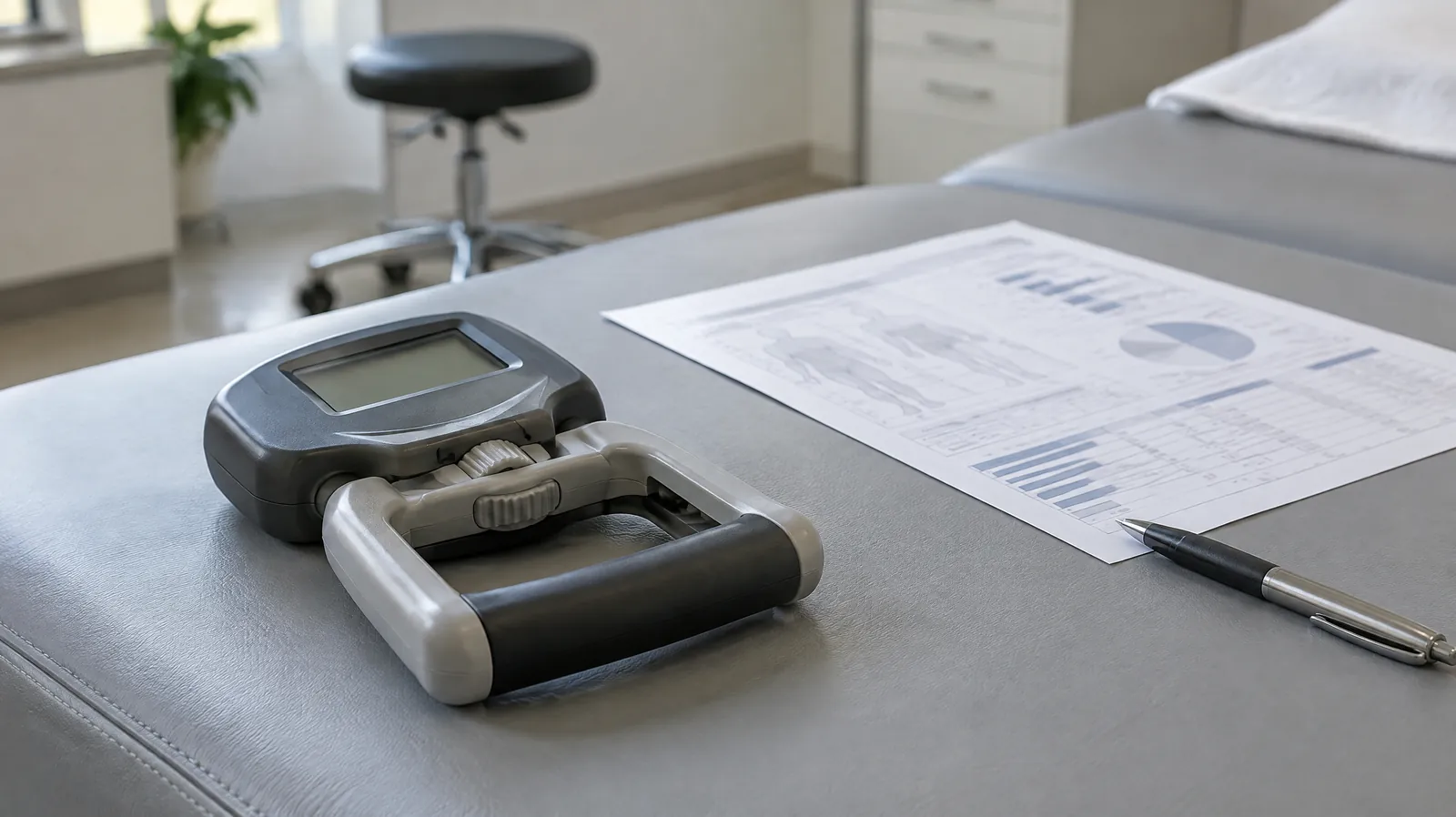
- Compare like with like. Lean mass measured by DXA on one machine and by bioimpedance on another are not interchangeable. Bioimpedance estimates body composition from electrical resistance and is sensitive to hydration, which shifts sharply in the weeks after surgery or when food intake falls on a GLP-1 drug. A trend on the same device under the same conditions is far more useful than a single reading.
- Lean is not only muscle. Because DXA lean mass includes water and organs, part of the early fall reflects glycogen and fluid rather than muscle tissue. Appendicular lean mass, measured in the arms and legs, is the closer proxy for skeletal muscle, and it is the figure most sarcopenia definitions use.
- Look at the bone line too. The same scan reports bone mineral density, which can also fall after surgery. Our earlier article on bone density, trace minerals and anaemia after metabolic surgery covers why that matters and how it is monitored.
- Percentages hide starting points. Losing 25% of weight as lean mass means something different for a 35-year-old with a high baseline muscle mass than for a 68-year-old who started near the lower limit. Clinicians increasingly look at the absolute amount left, not only the share lost.
What is still unknown
The drug trials measured body composition for 68 to 72 weeks, while surgical cohorts such as LABS followed patients for years. Long-term DXA data on people who stay on GLP-1–based drugs for many years, or who stop and restart them, are still thin. It is also not yet clear whether lean mass lost during treatment translates into more falls or fractures in older adults, the group in which it would matter most. Researchers are testing combinations meant to spare muscle; registered trials pairing semaglutide with the investigational antibody bimagrumab are one example, and their results will show whether the fat-to-lean ratio can be shifted by drugs rather than by exercise alone.
What this means for patients
- Expect a quarter to two-fifths. Whether weight comes off with a stapler or a weekly injection, a substantial minority of it will be lean tissue. That is the norm, not a complication.
- Watch the first months. After surgery, most of the lean loss happens in the first three to six months, which is when protein intake and supervised activity matter most. The six-month measurement predicts the twelve-month result.
- Measure function, not only mass. Handgrip strength, chair-rise tests and walking speed say more about everyday consequences than a DXA lean-mass figure alone.
- Plan for the long run. Readers following our coverage of weight regain and revision options and of surgery after a GLP-1 drug stops working will recognise the theme: the durable result depends on what happens after the fastest losses, including the nutritional follow-up that protects muscle and bone.
The LABS study that this site archives followed surgical patients for up to seven years and helped define what long-term success after bariatric surgery looks like. The next generation of studies is adding a body-composition column to that definition. On current evidence, both surgery and the incretin drugs pass it in similar ways: most of the weight they remove is fat, a meaningful share is not, and strength tends to fare better than the scales suggest.
Sources
- Nuijten MAH, Eijsvogels TMH, Monpellier VM, Janssen IMC, Hazebroek EJ, Hopman MTE. The magnitude and progress of lean body mass, fat-free mass, and skeletal muscle mass loss following bariatric surgery: a systematic review and meta-analysis — Obesity Reviews 23, e13370 (2022)
- Perez-Romero N, et al. Body Composition Changes After Bariatric Surgery: Magnitude, Timing, and Determinants of Excessive Fat-Free Mass Loss — Journal of Clinical Medicine 15(2):630 (2026)
- Jung HN, Kim SO, Jung CH, Lee WJ, Kim MJ, Cho YK. Preserved Muscle Strength Despite Muscle Mass Loss After Bariatric Metabolic Surgery: a Systematic Review and Meta-analysis — Obesity Surgery 33(11):3422–3430 (2023)
- Wilding JPH, Batterham RL, Calanna S, et al. Once-Weekly Semaglutide in Adults with Overweight or Obesity (STEP 1) — New England Journal of Medicine (2021)
- Look M, et al. Body composition changes during weight reduction with tirzepatide in the SURMOUNT-1 study of adults with obesity or overweight — Diabetes, Obesity and Metabolism (2025)
- Alissou M, et al. Impact of Semaglutide on fat mass, lean mass and muscle function in patients with obesity: The SEMALEAN study — Diabetes, Obesity and Metabolism 28(1):112–121 (2026)
- Conte C, Hall KD, Klein S. Is Weight Loss–Induced Muscle Mass Loss Clinically Relevant? — JAMA (2024)
- Caturano A, Amaro A, Berra CC, Conte C. Sarcopenic obesity and weight loss-induced muscle mass loss — Current Opinion in Clinical Nutrition and Metabolic Care 28(4):339–350 (2025)
- Bellicha A, et al. Effect of exercise training before and after bariatric surgery: A systematic review and meta-analysis — Obesity Reviews 22(S4):e13296 (2021)
- ClinicalTrials.gov — Safety and Efficacy of Bimagrumab and Semaglutide in Adults Who Are Overweight or Obese (NCT05616013)
- NIDDK — Weight-loss (Metabolic & Bariatric) Surgery